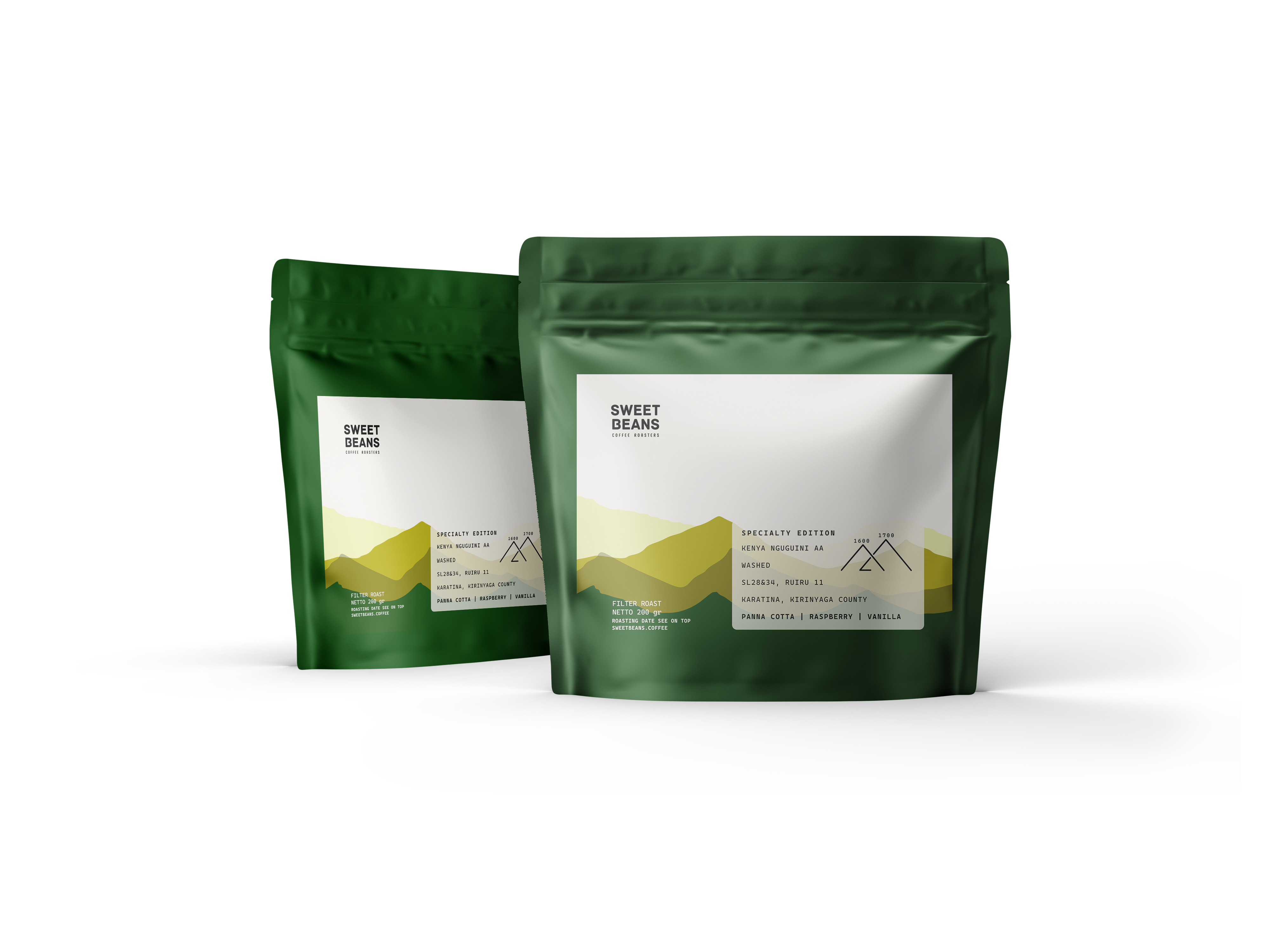
What the shop states
- Altitude
- 1,600–1,700 m above sea level
- Variety
- SL28 & 34, Ruiru 11
- Processing
- washed
More, if you like
The coffee’s story
Founded in 1958, Ngugu-ini Wet Mill is part of the Kibirigwi Farmers’ Cooperative Society Limited, which is based in Karatina in Kirinyaga County, within the central highlands of Kenya. The cooperative is one of the oldest in the country and has built a strong reputation for its long-standing commitment to quality coffee production and sound crop husbandry practices. Today, it works with over 1,200 smallholder farmers, each typically cultivating around one acre of land at elevations ranging between 1,600 and 1,650 meters above sea level—conditions that are ideal for producing high-quality Arabica coffee. Founded in 1958, Ngugu-ini Wet Mill is part of the Kibirigwi Farmers’ Cooperative Society Limited, which is based in Karatina in Kirinyaga County, within the central highlands of Kenya. The cooperative is one of the oldest in the country and has built a strong reputation for its long-standing commitment to quality coffee production and sound crop husbandry practices. Today, it works with over 1,200 smallholder farmers, each typically cultivating around one acre of land at elevations ranging between 1,600 and 1,650 meters above sea level—conditions that are ideal for producing high-quality Arabica coffee. Located in Kirinyaga County, a region widely regarded for its exceptional coffees, Ngugu-ini Wet Mill operates as a central washing station where farmers deliver freshly harvested coffee cherries. The harvest season generally runs from October through January, during which local pickers selectively harvest only ripe, red cherries to ensure optimal quality. Processing at Ngugu-ini follows the traditional Kenyan fully washed method, known for producing coffees with bright acidity and clean, complex flavor profiles. After delivery, cherries are pulped using disc pulpers to remove the outer skin, leaving the beans coated in mucilage. Water is used to transport the beans through channels, where initial quality separation takes place based on density—heavier, higher-quality beans sink, while lighter, lower-quality beans float. This process results in three grades of parchment coffee: P1 (highest quality), P2, and P3. The parchment is then transferred into fermentation tanks, where it undergoes dry fermentation for approximately 24 hours. During this stage, the mucilage breaks down, and the beans develop a characteristic rough, pebble-like texture. Once fermentation is complete, the beans are thoroughly washed in clean water channels, allowing for further removal of defects and lower-density beans. SL28, originally selected in the 1930s, is especially valued for its drought tolerance and complex, sweet profile with wine-like undertones. SL34, another historic selection, is admired for its rich body and balanced acidity, though it requires careful management due to its susceptibility to disease. Ruiru 11 offers high yields and strong disease resistance.
Text from the description at sweetbeans.coffee. We neither write nor shorten it.


